
Renewed inflationary pressures, led by a spike in prices of vegetables and cereals, have cast a spell on the equity markets in the past month. The BSE Sensex and Nifty50 have declined up to 2 per cent each during the period, clipping the 13 per cent rally from the March lows, shows data from ACE Equity. Investors typically consider shares of fast-moving consumer goods (FMCG) companies as defensive bets, putting their weight behind them in a falling market.

The eight core industries -- fertilisers, cement, steel, electricity, crude oil, coal, petroleum refinery products and natural gas -- have a combined weight of about 38 per cent in the Index of Industrial Production.

India's infrastructure industries grew by a faster 8.7 per cent in February 2008, lending hopes of a revival in industrial production growth and in turn a higher rate of economic expansion.

Manufactured goods, which have around 80 per cent weight in the index of industrial production, which measures industrial growth, grew by 12.7 per cent in November 2009 compared to 2.7 per cent in the same month a year ago.
Looking at specific industries, the imbalance that has been visible over the past several months persists.

The March 2020 lockdown did not stop the spread of infection (as it triggered a huge reverse migration from cities), but it did help to flatten the curve and gave time to scale up health infrastructure.

Poor performance of coal, petroleum refinery products and natural gas pulled down the core sector growth to 2.1 per cent in December, 2013 from 7.5 per cent in the same month a year ago.

Manufacturing sector activities in India moderated in June from a 31-month high in May, but output remained in the growth territory, as new work orders expanded sharply amid favourable demand conditions, a monthly survey said on Monday. The seasonally adjusted S&P Global India Manufacturing Purchasing Managers' Index (PMI) fell from 58.7 in May to 57.8 in June. Despite the fall, the headline figure pointed to a considerable improvement in operating conditions, the survey said, adding that the demand strength positively impacted several other measures such as sales, production, stock building and employment.

There is no use of the BJP targeting the likes of Mamata Banerjee and M K Stalin, directly by the party's political bosses, both in Delhi and the respective state capitals, or even using the Raj Bhavans to fire those salvos from. Successive elections have proved that it's counter-productive, if anything. But the BJP is yet to understand it, acknowledge it, points out N Sathiya Moorthy.

While Jio MF will undoubtedly grow in size, it will have to cross multiple hurdles even to emerge as the market leader, observes Debashis Basu.
Factory output, as measured by the Index of Industrial Production, contracted in March to a five-year low of 3.5 per cent.

He is, however, hopeful that impact of recent reforms initiatives will manifest in the data for the second half of the fiscal.

'It is like a chicken-and-egg situation.' 'All these product tweaks are innovative, but traders won't move unless there is liquidity.' 'And liquidity cannot be generated until traders move.'
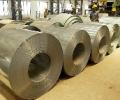
Led by crude oil and finished steel, the output of the six core infrastructure industries grew by 7.4 per cent in March, 2011, an improvement from the 6.8 per cent expansion clocked a year ago.

The slowdown fear, as substantiated by various parameters like the HSBC Purchasing Managers' Index as well as the Index of Industrial Production, has gripped large companies but the smaller entities still seem hopeful of excellent growth. At least, tax collection figures show this trend.

Meanwhile, IIP for June was revised upwards to a decline of 1.78 per cent from a provisional 2.2 per cent dip in production. It contracted by 2.8 per cent in May this year.

During the month, inflation in vegetables shot up to 35.99 per cent, as against 26.10 per cent in October. Likewise, the prices of cereals and eggs grew at a faster pace of 3.71 per cent.

IndusInd Bank was the top gainer in the Sensex pack, rising nearly 6 per cent, followed by Axis Bank, SBI, Maruti, Tech Mahindra and Reliance Industries. NSE Nifty surged 183.70 points to close at 17,166.90.


Mobile phone manufacture in India started only in 2006.

Industrial production re-entered the negative territory by contracting 1.6 per cent in January, mainly on account of the decline in output of capital goods, manufacturing and mining sectors. The output of the manufacturing sector -- which constitutes 77.6 per cent of the Index of Industrial Production (IIP) -- shrank by 2 per cent in January, as against a growth of 1.8 per cent during the same month last fiscal, as per data released by the government on Friday. The worst performance was witnessed by the capital goods sector, which recorded a contraction of 9.6 per cent during the month under review, compared to a 4.4 per cent decline a year ago.

Industrial production grew by just 1.8 per cent year-on-year in December 2011 due to contraction in mining and capital goods sectors and a lower manufacturing sector growth.

The recent equity market weakness has sobered up investor mood, but the coming festive season is keeping analysts upbeat on stocks related to the consumption basket. Among the lot, fast-moving consumer goods (FMCG), retail, and consumer electronics segments are expected to do well over the next few months, and investors should thus selectively take bets in these pockets, analysts suggest. "We expect good volume growth for the FMCG sector during the festive season with some improvement in rural demand.

Many life insurance companies are yet to see a sharp spike in the sale of high-value policies as was widely expected in the aftermath of the government's decision to tax income from insurance policies having an aggregate premium above Rs 5 lakh in a year.

Describing the high commodity and food prices a threat to growth and food security in energy dependent emerging economy, the Minister called for collective global action to overcome the crisis.
Driven by a surge in manufacturing sector, the Index of Industrial Production is estimated to grow at 7.5 per cent in the current fiscal, according to Centre for Monitoring Indian Economy.

rediffGURU Dev Ashish answers your personal finance and mutual fund queries.

Manufacturing activities in India advanced further and touched a 31-month high in May supported by stronger increase in new orders and favourable market conditions, which in turn generated more employment opportunities, a monthly survey said on Thursday. The seasonally adjusted S&P Global India Manufacturing Purchasing Managers' Index (PMI) rose from 57.2 in April to 58.7 in May, indicating the strongest improvement in the health of the sector since October 2020. The May PMI data pointed to an improvement in overall operating conditions for the 23rd straight month.

Soft drinks are a part of the larger consumer non-durables category, which rose five per cent in June, against a 0.5 per cent fall a year earlier, showed official data released on Monday.
If the numbers for the Index of Industrial Production for January 2009 are in fact a precursor to a bottoming out, they suggest the transmission from policy action to economic response is lightning fast. However, the numbers need to be understood in greater detail, and must be interpreted with caution.

Optimistic buying in blue-chip stocks ahead of release of industrial production data for July and retail inflation for August drove stocks higher.
The overall index showed an increase of 2.4 per cent over November 2007, which is not a great performance but apparently different from the 1.4 per cent decline in the previous month. However, the base effect seems to be largely responsible for both numbers.

Natural gas and fertiliser output recorded a negative growth of 1.7 per cent and 1 per cent, according to the data of the Commerce and Industry Ministry.
For the economy to grow by 6.9 per cent in 2011-12, GDP growth for the fourth quarter needs to be 6.9 per cent.

Within IIP, the capital goods sub-index has contracted for seven continuous months, suggesting investment demand continues to be weak.

These stocks offer the best combination of maximum 'buy' recommendations from brokerages and share price upside over the next 12 months.

The Index of Industrial Production, which measures the industrial growth, for July is scheduled to be released by the government on Friday.

Factory output growth, as measured by the Index of Industrial Production, fell sharply to 1.8 per cent in December 2011, from 8.1 per cent a year ago, mainly on account of contraction in mining, capital goods and poor growth in manufacturing sector.
WPI-based inflation falls to 5-month low of 6.16%.
